

Free tool · Q3 2026 data
Lease vs. Buy Calculator — Inland Empire Industrial
Run your own numbers on leasing versus owning a warehouse, distribution building, or flex space. Seeded with current Inland Empire rents and pricing — every assumption editable.
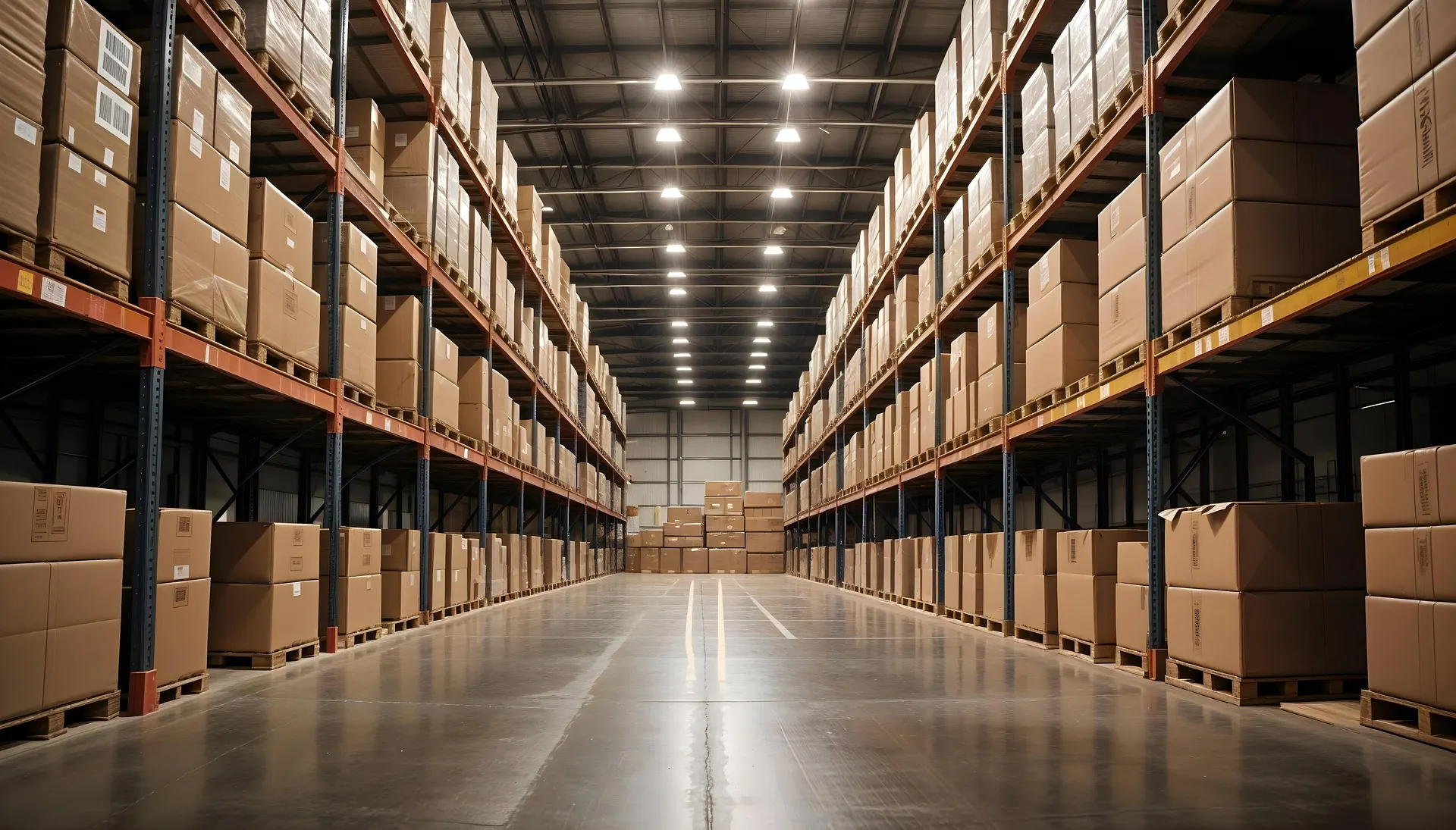
Whether to lease or buy an Inland Empire industrial building comes down to your time horizon, your cost of capital, and whether you want the real-estate upside. As a rule of thumb, operators planning to stay seven years or longer who can fund the down payment often build more wealth buying; shorter horizons or capital-constrained users usually favour leasing. This calculator gives you the side-by-side for your numbers, including the year ownership overtakes renting.
Lease versus buy calculator
Disclaimer: Educational estimate based on current Inland Empire market averages and the assumptions you enter — not financial, tax, or investment advice. It ignores income-tax effects, depreciation, and the interest deduction, all of which typically favour ownership. Consult your CPA and lender before acting.
Source: Rent and pricing seeds derived from Kidder Mathews Q3 2026, Lee & Associates Mid-2026, Q3 2026. Financing assumptions are user-entered defaults, not quoted terms.
Last updated Data through Q3 2026
How this calculator works
The lease path compounds your starting rent by the escalation rate for each year you occupy, and totals it. The buy path adds your down payment to every mortgage payment you make, then subtracts what you would net selling at the end — the property's appreciated value, less selling costs, less whatever loan balance remains. The difference between those two totals is the answer.
The crossover year is the first year in which owning costs less than renting. It exists because the two paths move in opposite directions: rent escalates off an ever-higher base forever, while a mortgage payment is fixed and the equity behind it grows through both principal paydown and appreciation. Early on, the 5% cost of selling swamps the equity you have built. Later, it stops mattering.
What this calculator leaves out
- Tax effects — depreciation, the mortgage interest deduction, and 1031 exchange treatment. All three favour owning, so the buy case here is conservative.
- Closing costs on acquisition — due diligence, loan fees, and escrow, typically 1–2% of price.
- Tenant improvement allowances and free rent, which in a 7.1% vacancy market are a real concession worth negotiating and can shift the lease side meaningfully.
- Capital expenditure an owner carries — roof, slab, HVAC, and parking lot — that a tenant on a true NNN lease also pays, but that lands unevenly.
- What else the capital could earn. A down payment tied up in real estate is not funding equipment, inventory, or headcount.
Both paths are modelled net of taxes, insurance, and maintenance. A NNN tenant pays those on top of rent and an owner pays them directly, so excluding them from both sides keeps the comparison fair — it does not mean they are free.
Where the seed numbers come from
Starting rent prefills from the Q3 2026 sub-regional asking rate — $1.05/SF/mo NNN in Inland Empire West, $0.93/SF/mo NNN in Inland Empire East. Purchase price prefills from the midpoint of the warehouse and distribution sale range for that sub-region. Both come from the same data behind the Inland Empire Industrial Market Report, and both are meant to be overwritten with a real quote once you have one. If you want the value side first, run the Industrial Value Estimator.
Questions about leasing vs. buying industrial property
Is it better to lease or buy a warehouse in the Inland Empire?
It comes down to how long you will occupy the building, what your capital is worth elsewhere, and whether you want the real-estate upside. As a working rule, owner-users who expect to stay seven years or longer and can fund the down payment usually build more wealth buying, because principal paydown and appreciation both accrue to them instead of a landlord. Operators with a shorter horizon, uncertain headcount, or better uses for the cash generally do better leasing — and keep the flexibility to resize. In Q3 2026 the Inland Empire is tenant-favourable, with 7.1% direct vacancy and asking rents at $0.99/SF/mo NNN, so lease concessions are real and worth weighing against a purchase.
How much down payment do you need to buy an industrial building in California?
Conventional commercial financing typically requires 25% to 35% down. Owner-users who will occupy at least 51% of the building can often use an SBA 504 loan and put down roughly 10%, with the balance split between a bank first and a fixed-rate CDC second. That difference dominates this calculation — the same building can look expensive at 30% down and compelling at 10%, because the out-of-pocket capital is what gets compared against rent. If you are an operator planning to occupy the space, ask your lender about 504 eligibility before assuming you need a quarter of the purchase price in cash.
How long do I need to stay for buying to beat leasing?
For most Inland Empire industrial buildings the crossover lands somewhere between year five and year nine, depending on your down payment, loan rate, and what you assume about appreciation. Before the crossover, the transaction costs of buying and selling — roughly 5% on the way out alone — swamp the equity you have built. After it, principal paydown and appreciation compound while rent keeps escalating three to four percent a year off an ever-higher base. The calculator on this page reports your specific crossover year rather than a rule of thumb.
Does this calculator account for taxes and depreciation?
No, and that omission favours leasing. Ownership carries real tax benefits this model ignores: depreciation of the improvements, deduction of mortgage interest, and potential 1031 exchange treatment on sale. It also ignores the entity structure most owner-users adopt, where an LLC owns the building and leases it back to the operating company. Those effects are specific enough to your return that guessing at them would do more harm than leaving them out. Treat the output as the pre-tax picture, then have your CPA layer the tax analysis on top.
What does NNN mean in this comparison?
NNN — triple net — means the tenant pays property taxes, insurance, and maintenance on top of base rent, typically $0.12 to $0.20 per square foot per month in the Inland Empire. Both paths in this calculator are modelled net of those costs, because an owner pays them directly and a NNN tenant pays them through the lease. Excluding them from both sides keeps the comparison honest; it does not mean they are free. Budget for them separately either way.